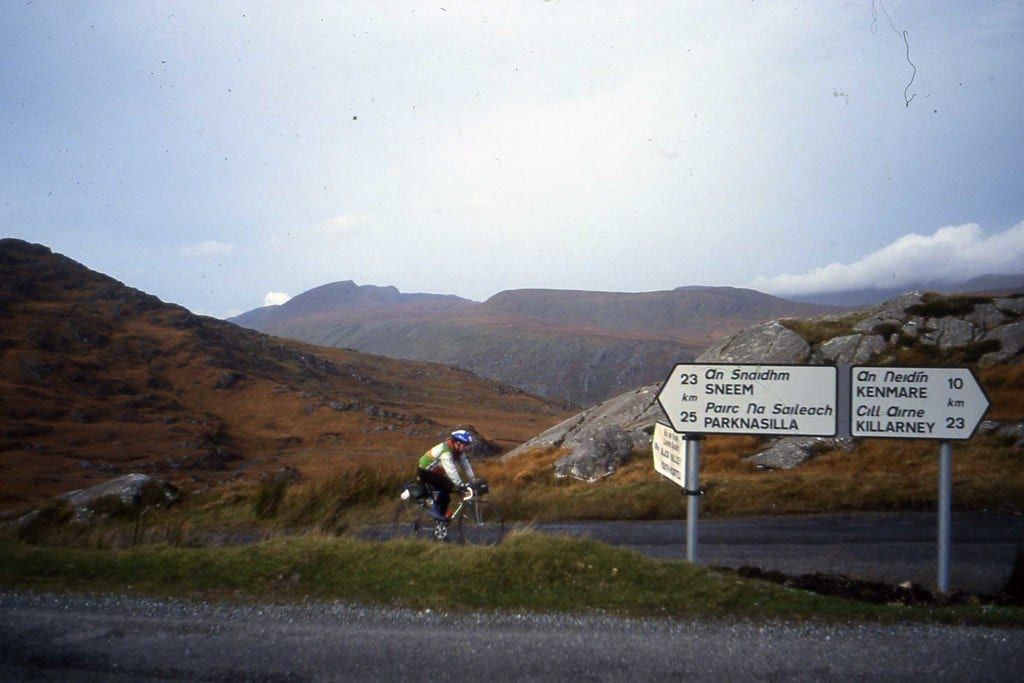
The Ring of Kerry is Ireland's best-known cycling loop, and it's also its most confusing one to plan, because no two sources quote the same distance or the same starting direction. Strip away the disagreement and you're left with a 170-216km circuit of the Iveragh Peninsula, starting and finishing in Killarney, with two proper mountain passes and long stretches of coast road shared with tour coaches.
This guide sorts out the real numbers, lays out the route stage by stage, and gives you a pace to match your fitness and time budget, whether that's one long day or a full week. For background on the route's landmarks and history before you go, see our overview of the Ring of Kerry.
Ring of Kerry Cycling Route at a Glance
Every Ring of Kerry cycling guide seems to quote a different number, and none of them are wrong. The popular touring loop most cyclists actually ride, starting and finishing in Killarney, comes to about 170km. Discover Ireland's official measured route is 216km (74km on main road, 143km on quieter minor roads) because it plots a more roundabout path than the road most riders take. The route used for the annual cycling sportive runs 180km with roughly 2,500m of climbing across three named passes, rated Challenging on a five-point scale. Pick the figure that matches the route you're actually riding, not the other way round.
- Start/finish: Killarney
- Distance: 170km (popular loop) up to 216km (official measured route)
- Elevation gain: roughly 2,500m on the full sportive route
- Difficulty: moderate to challenging
- Time needed: one long day for fit riders, up to a week at an easy pace
Not everyone in your group needs to pedal. A driving audio tour covers the same 179km circuit by car, at its own pace, which works well if someone's sitting this one out.
How Long It Takes & Which Direction to Ride
Fit, event-trained cyclists cover the full loop in a single day. On the 180km sportive route, elite riders finish in 4-5 hours, advanced riders in 5-6, intermediate riders in 6-8, and beginners should plan on 8-12 hours in the saddle. That last figure includes stops — nobody rides Kerry roads without stopping.
- Elite: 4-5 hours
- Advanced: 5-6 hours
- Intermediate: 6-8 hours
- Beginner: 8-12 hours
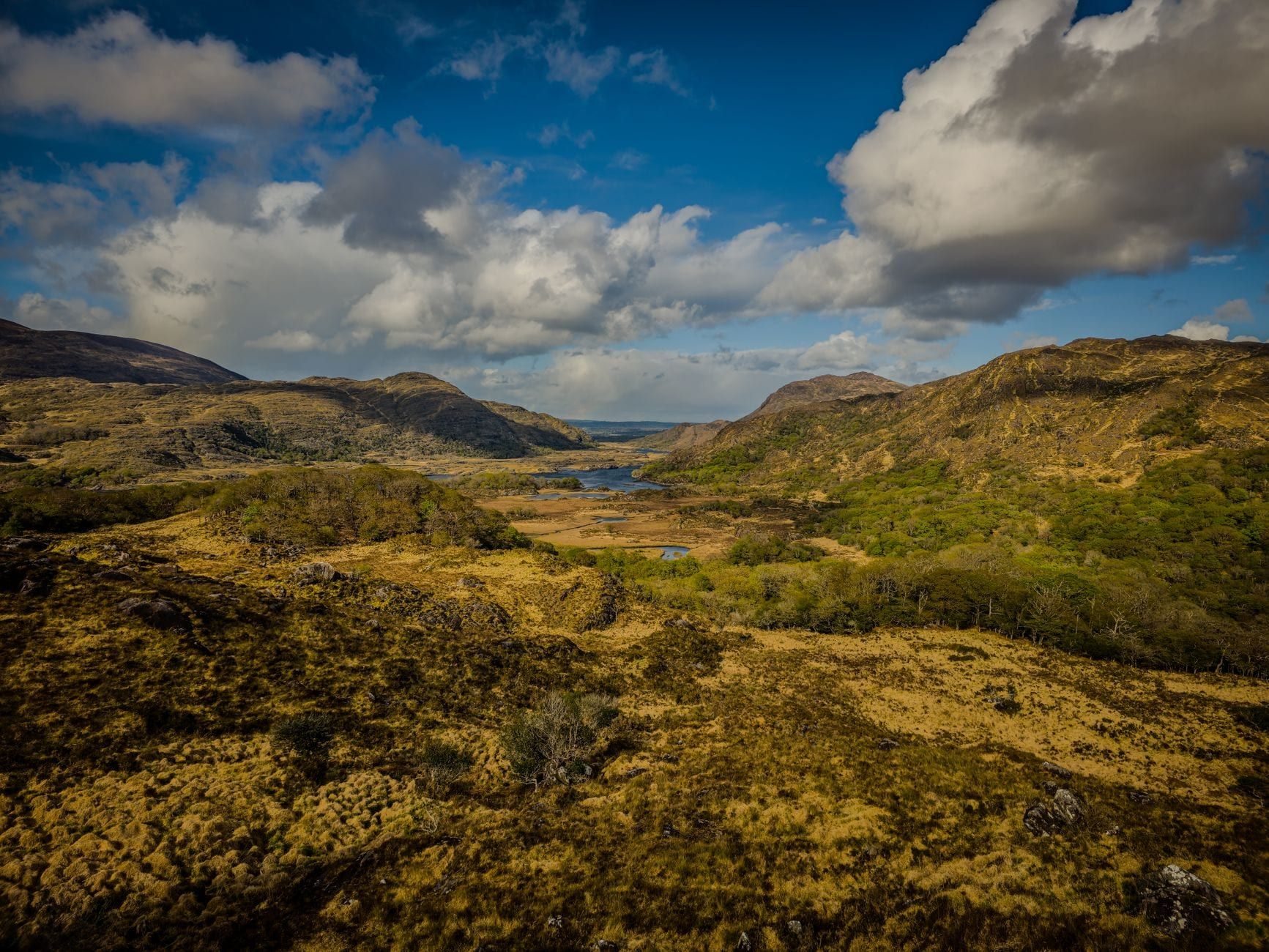
Touring cyclists who'd rather see Kerry than race through it usually split the ring over two or three days, riding 60-90km a day with time to stop at Ladies View, Staigue Fort or Derrynane Beach. Discover Ireland's own recommendation is a full week, which sounds generous until you've stood at the Kerry Cliffs in a squall and understood why nobody local is in a hurry.
Sources disagree, loudly, on which way to ride. Discover Ireland recommends going clockwise, out via Kenmare, for safety. Some Killarney bike-rental operators route customers anti-clockwise, via Killorglin, calling that the traditional start. Both can be right depending on what problem you're solving. Tour coaches run the ring in one direction only, anti-clockwise via Killorglin, because the road is too narrow for two coaches to pass on the tighter bends. Ride clockwise and you meet those coaches head-on, on a bend, where you can both see each other coming. Ride anti-clockwise and a coach might come up behind you on the same blind bend. That's the rule that matters more than any label: face the coaches, don't let them find you from behind.
Stage-by-Stage Route Guide
The route breaks into eight practical legs if you're riding town to town, or six to seven official sections if you're following Discover Ireland's OS Discovery map sheets. Both versions earn their keep — one for planning where to sleep, the other for cross-checking against a paper map when signal drops.
| Leg | Distance | Notes |
|---|---|---|
| Killarney → Kenmare | 42 km | Via N71, climbs toward Moll's Gap |
| Kenmare → Sneem | 30 km | Rolling road along Kenmare Bay |
| Sneem → Waterville | 35 km | Passes the Staigue Fort turn-off and Caherdaniel |
| Waterville → Cahersiveen (via Portmagee & Valentia) | 45 km | The Skellig Ring detour, Kerry Cliffs |
| Cahersiveen → Killorglin | 42 km | Flattest stretch, Glenbeigh and Rossbeigh Beach |
| Killorglin → Killarney | 22 km | Final leg back via N72 |
Out of Killarney, the ride to Killorglin covers 22km of easy, mostly flat road, a fair warm-up before the climbing starts. From Killorglin it's a short 13km hop to Glenbeigh, worth a detour onto Rossbeigh Beach if the tide's out. The next stretch, Glenbeigh to Cahersiveen, runs 27km along Dingle Bay with the MacGillycuddy's Reeks filling the inland view.
Cahersiveen to Waterville is 16.5km if you skip the Skellig Ring, though most riders don't. The detour through Portmagee and Valentia Island adds distance but strips out almost all the coach traffic. Past Waterville, the road climbs over Coomakista Pass before dropping into Caherdaniel, 14km on, with Derrynane House and its beach at the bottom of the descent.
Caherdaniel to Sneem is 21km, then Sneem to Kenmare 26.5km along Kenmare Bay. The last leg, Kenmare back to Killarney, is 33km and the most scenic of the loop, climbing over Moll's Gap and passing Ladies View before dropping through Killarney National Park past Muckross House. For a full breakdown of every stop worth making along the way, see our guide to every highlight on the route.
Best Multi-Day Itineraries: One Day to a Week
The Ring of Kerry Charity Cycle is the benchmark one-day effort: a 170km circuit starting and finishing in Killarney, held every July. The 2026 edition marks its 44th year, and the event has raised more than €21.9 million for over 200 charities since it began in 1982. It isn't a race — riders go at their own pace with rest stops along the way — but it's still a full day in the saddle for most participants.
A two-day split suits anyone who wants scenery over stats. Ride Killarney to Cahersiveen or Waterville on day one, roughly 65-80km, stay over, then close the loop the next day. It turns the ring into a manageable ride with an evening off the bike instead of a marathon.
Add a third day and you can fit in the Skellig Ring or a full Valentia Island loop without rushing, riding 50-60km a day and leaving afternoons free for the Kerry Cliffs or a Skellig Michael boat trip, booked well ahead.
Discover Ireland's own pace guide is a full week, and it's not overkill if Killarney National Park, Derrynane and a rest day are all on your list. A rough self-guided budget for three nights in B&Bs, twin share, runs €120-€210 per person, before food and bike hire. Ask about luggage transfer between B&Bs if you're touring over multiple nights, or arrange a rest day and join a day tour from Killarney to see the bits you'd otherwise ride straight past.
Key Climbs & How Tough It Really Is
Moll's Gap is the climb most riders remember: 5.1km at an average 5%, topping out at 258m between bare granite hills. It's steady rather than brutal, and the view back over the Kenmare valley on the descent is worth the legs it costs.
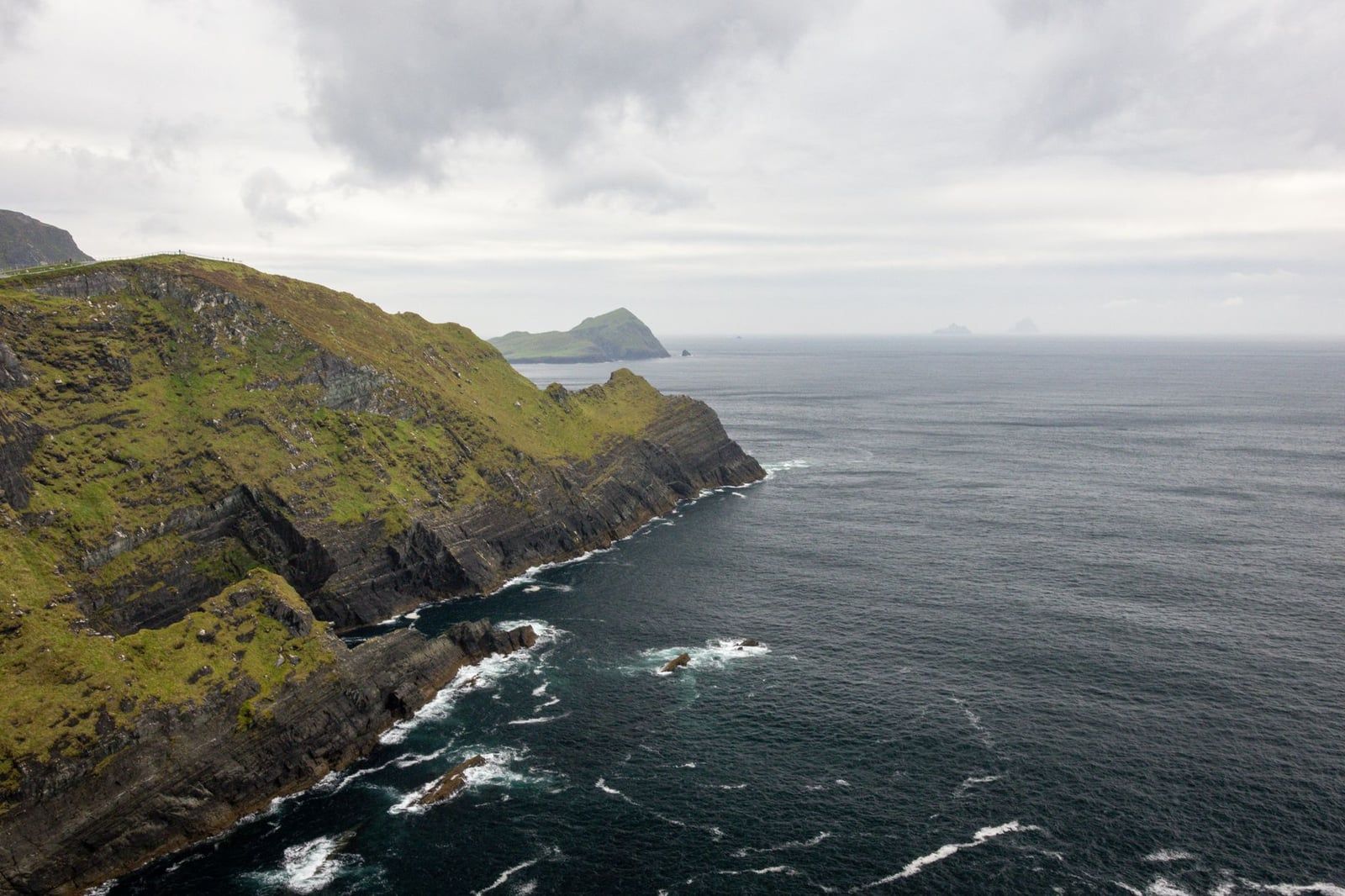
Coomakista Pass, above Waterville, is shorter and sharper: 3.8km averaging 5.6%, cresting at 215m with the Atlantic and the Skellig Islands opening up on the far side. Most riders rate this view above Moll's Gap, even if the climb is over quicker.
Riders on the inland sportive route also take on Ballaghbeama Gap, a longer 6.4km drag averaging 4.4% to a 281m summit through empty, boggy hill country. It's quieter than anything on the N70 and works a different set of muscles entirely.
The Gap of Dunloe is the toughest optional add-on, and it isn't part of the official ring — riders detour to it from Killarney. It climbs 11km from Kate Kearney's Cottage at around 6% average, kicking up toward 10% in sections, on a surface rougher than the main roads. Skip it on narrow road tyres unless you're ready to walk a stretch.
None of these gradients are alpine, but stacking two or three of them into one day, on top of 150-plus flat kilometres, is what turns the ring into a genuine event rather than a scenic pootle. Anyone attempting the full loop in a single day should have a few 100km-plus rides with real climbing behind them already, not just fitness on the flat.
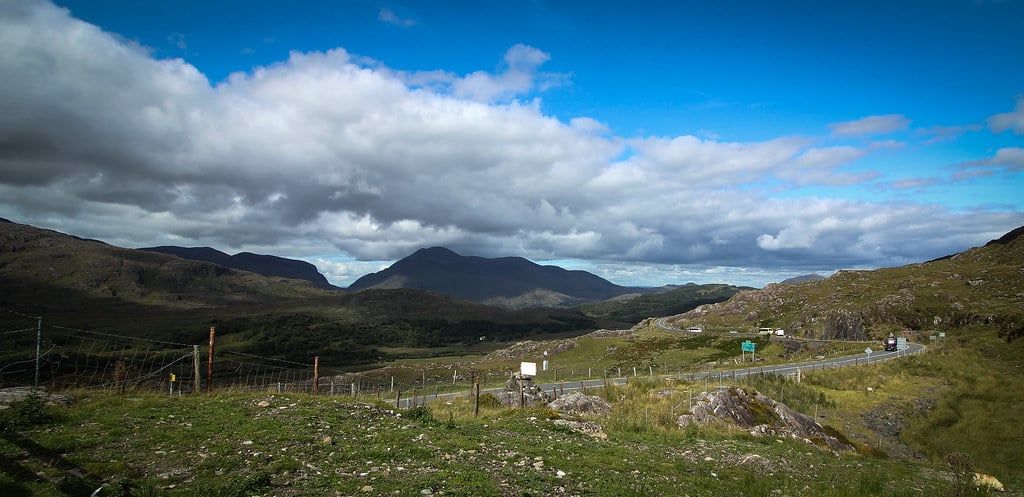
Worthwhile Detours (and Easier Alternatives)
The Skellig Ring, via Valentia Island, Portmagee and Ballinskelligs, adds about 30km to the total distance and takes riders past the Kerry Cliffs and the Geokaun Mountain viewpoint. It carries a fraction of the coach traffic that clogs the main N70, which alone makes the extra distance worth it for most cyclists.
A full Gap of Dunloe-Black Valley loop out of Killarney runs roughly 40km with serious climbing and no ring buses to dodge, since coach tours stop at Kate Kearney's Cottage and continue by boat and pony-trap rather than road. It's a strong half-day ride on its own, separate from the main circuit.
Riders short on time or nerve for the full ring have an alternative in the Ring of the Reeks, a loop around Ireland's highest mountains. It's a proper day's ride, but a fraction of the commitment.
| Ring of Kerry | Ring of the Reeks | |
|---|---|---|
| Distance | 170-216km depending on measurement | 85.7km (53.3 miles) |
| Elevation gain | ~2,500m on the sportive route | ~2,800ft (roughly 850m) |
| Traffic | Coach and rental-car traffic on the N70 | Quieter roads around the Reeks |
| Best for | A full-day or multi-day peninsula circuit | A shorter one-day mountain loop |
Kerry's greenways are the low-stress option: fully traffic-free, flat to rolling, and suited to families or anyone who'd rather not share a road with a tour coach at all. They don't replicate the ring's scenery, but they're a sensible warm-up ride the day before you tackle it.
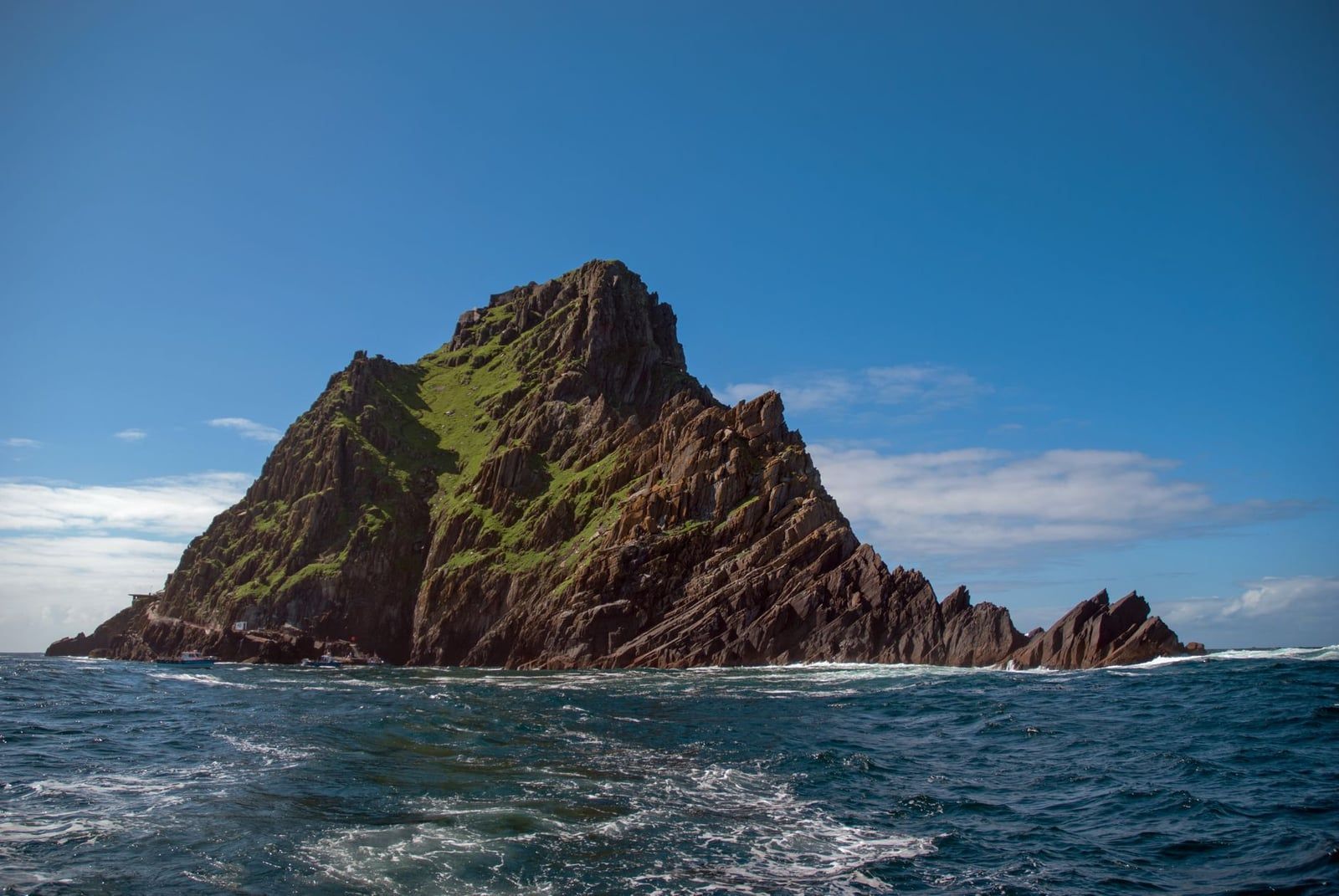
Bike Hire, E-Bikes & What to Pack
Bike shops in Killarney, Cahersiveen and Kenmare rent hybrids, road bikes and e-bikes to Ring of Kerry cyclists, and most can fit you out the same day in season. Some operators set a minimum three-day rental for a full ring trip and won't hire for single-day events, so check before you book if you're planning a one-day push. If you're flying in rather than starting from a car, our guide to getting to the Ring of Kerry covers routes from Cork, Dublin and Kerry Airport.
An e-bike earns its keep on Moll's Gap and especially the Gap of Dunloe, where the extra assist turns a grind into a manageable climb. It's also the sensible choice for anyone attempting the loop in a single day who isn't already riding regularly.
Multi-day renters can usually add panniers or arrange luggage transfer between B&Bs, which matters more than it sounds on a route with two proper mountain passes. Nobody wants to climb Moll's Gap carrying four days of clothes.
- Spare inner tubes and a pump
- Multi-tool and a basic chain tool
- Front and rear lights, even for daylight riding
- Bright or reflective clothing
- Waterproof jacket and a warm layer
- Phone with offline maps downloaded
Riders bringing their own bike should check brake pads and tyre tread before flying out. The descents off Moll's Gap and Coomakista are fast, and Kerry's back roads have their share of loose gravel and cattle grids that punish worn kit.
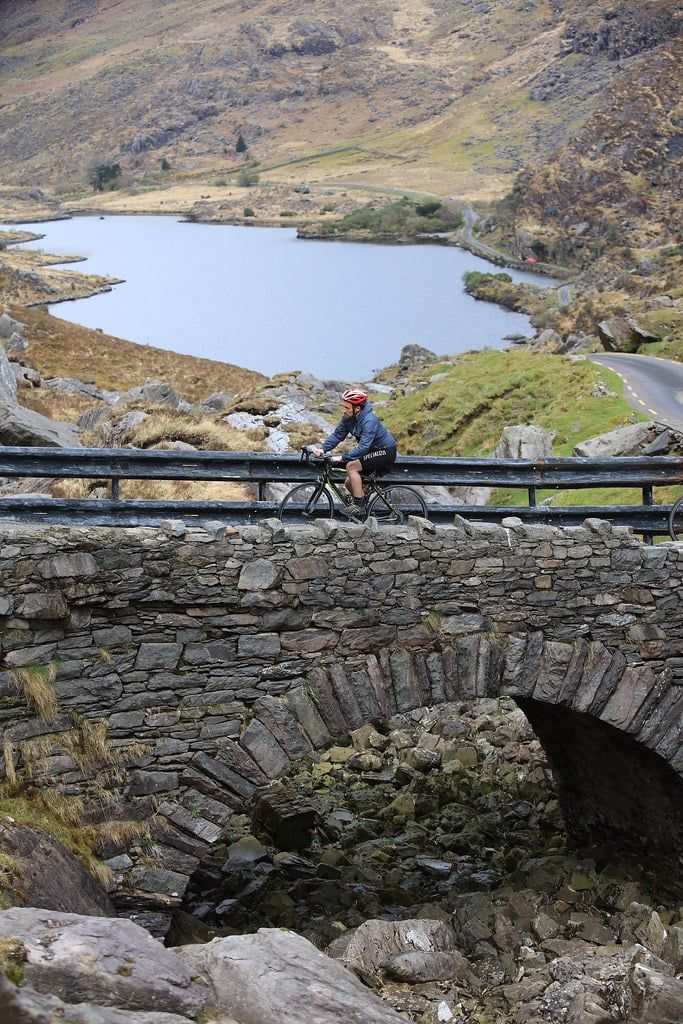
When to Go, Weather & Road Safety
Kerry's cycling season runs May to September. June and September are the sweet spot: long daylight, settled weather, and noticeably fewer coaches than the July-August peak, when Killarney's B&Bs fill up and the N70 gets genuinely busy.
Weather on the peninsula changes fast, even in summer. Pack a waterproof and a warm layer regardless of the forecast — a clear morning in Killarney can turn into a soaked, windy afternoon at Coomakista Pass with no warning.
The N70 has no hard shoulder in most places, and coaches and farm vehicles use the same narrow lanes cyclists do. Ride clockwise as discussed, wear something bright even in daylight, and use lights on darker or overcast stretches. Kerry's road surface doesn't leave much room for a car to give a wide pass.
- Quieter back roads have cattle grids and free-roaming sheep, especially near Ballaghbeama and the Black Valley
- Mobile coverage is patchy through the mountains and Black Valley — download offline maps beforehand
- Cliff and viewpoint car parks fill early in peak season; starting before 9am beats the coach convoys
Book accommodation ahead for July and August, when Killarney, Kenmare and Waterville sell out days in advance. In June or September, a day's notice is usually enough. Check current opening hours and entry fees for stops like Muckross House or Kerry Cliffs before you fix a schedule, since they shift with the season.
Frequently Asked Questions
How long does it take to cycle the Ring of Kerry?
Fit riders finish the 170-180km loop in a single long day, roughly 6-12 hours depending on fitness. Most touring cyclists spread it over two to three days, and Discover Ireland recommends up to a week for a leisurely pace.
Is cycling the Ring of Kerry suitable for beginners?
The main N70 loop suits a reasonably fit beginner who's comfortable riding in traffic. Steeper add-ons like the Gap of Dunloe or Ballaghbeama Gap are tougher and better tackled on an e-bike, or skipped altogether.
Should you cycle the Ring of Kerry clockwise or anticlockwise?
Sources disagree on the naming, but the practical point is to ride the direction that has you meeting tour coaches head-on on blind bends rather than being overtaken from behind. Discover Ireland recommends the clockwise direction, via Kenmare, for that reason.
How far is the Ring of Kerry cycling route, exactly?
Figures vary by source: about 170km is the popular touring loop, 180km is the sportive distance with roughly 2,500m of climbing, and Discover Ireland's official measured route is 216km because it plots a slightly different, more roundabout path.
Can you cycle the Ring of Kerry on an e-bike?
Yes. E-bikes are widely available for hire in Killarney and make a real difference on climbs like Moll's Gap and the Gap of Dunloe.
What is the Ring of Kerry Charity Cycle?
An annual one-day event, 170km, held every July, marking its 44th edition in 2026. It has raised more than €21.9 million for over 200 charities since starting in 1982, and it's ridden at participants' own pace rather than raced.
Do you need to book accommodation in advance?
Yes, in July and August, when towns like Killarney, Kenmare and Waterville fill up fast. In June and September, a day's notice is usually enough.
Are there quieter or shorter alternatives to the main Ring of Kerry road?
Yes. The Skellig Ring adds about 30km but carries far less traffic than the N70, the Ring of the Reeks is an 85.7km alternative loop, and Kerry's traffic-free greenways offer a lower-stress option entirely.